Showing posts with label Garden. Show all posts

May 23, 2010

A Post on Compost

I have a problem: every time I'm in a public restroom and I see an empty roll of toilet paper, I'm tempted to pocket the cardboard cylinder to add it to my compost pile. I no longer just see trash - I see carbon or nitrogen. A 2:1 balance of carbon material (brown leaves, paper, stale bread, straw and wood shavings) and nitrogen material (fruit rinds, vegetable scraps, dead flowers, coffee grounds and tea bags) is essential to a successful compost heap. I've realized how difficult it is to get my hands on abundant sources of carbon in the city. I don't have enough fallen leaves in my yard nor do I waste enough bread to rely on those sources of carbon to feed the microbes in the compost. I'm also reluctant to use pages from newspapers with colored inks - just don't trust it. So I've taken to begging neighbors for their discarded phonebooks (when was the last time you used one?) - being careful not to use the colored pages, of course.

I've actually got two compost bins: a tumbling one and a stationary earth machine. Tumbling bins turn your waste into rich soil far more quickly than stationary heaps (about 1 month rather than 3 months plus). Even though my Suncast tumbler is turning out copious quantities of earthy gold, I've got a few bones to pick with the manufacturers. I nearly sent a letter of complaint after struggling to put the dern thing together - yeah, I'm a contractor and I had trouble assembling this highly unwieldy apparatus. I had to read and reread the instructions and wield some fairly uncommon tools. The contraption also has a rather unfriendly latching lid which requires too much torque for my wife's tiny wrists. So if you're looking to avoid garden work or at least share the load with family members who can't bench press 200 pounds, this device may not be your best bet. I must say though, that the Suncast tumbler gets the job done in a jiffy and is an excellent choice for the apartment dweller since it needn't sit upon dirt.


So I've vented and now I'll just gush. I'm like a pig in poo - checking on the creatures who spend their entire lifespan in this bin. I've never seen so many fruit flies! It's completely fascinating to feel the heat coming off of the pile, which is supposed to be caused by the oxidation of carbon materials - but I'm not really quite sure what all of that means. I do know that my compost will be a nice addition to my clay soil for many reasons though: it's a soil conditioner, a fertilizer and a natural pesticide. I know compost piles are never perfect and I'm constantly adding a little more of this or that, leaving the lid off so that heat can escape... rubbing a rabbit's foot and standing on my head... Though composting has been around since the Romans threw their first toga parties, this is a fun experiment that's only just begun for me. As soon as I get the hang of this whole thing I think I'll try my hand at making my own compost tea. Perhaps I can coerce my daughter, the tea lover, into taking on that challenge - wishful thinking. Here's a picture of her with her fingers in the puddin'.

April 10, 2010

Spoiled Soil

I'm at Starbucks this morning and no, I don't drink coffee. The barista gives me a sympathetic smile as she hands over a hefty Hefty bag of spent coffee grounds. She too lives in the area and has clay in her backyard instead of real soil. Oh, the pain!

Since first setting foot on the property, I suspected that the soil was less superb (check out the picture of the garden), but I wanted to investigate. I didn't want to install a grey-water recovery system to enrich soil that was no good... So, I did a pretty straightforward test that you can all do at home:

 The Squeeze Test

In general, soils are classified as clay, sandy or loamy. Clay can be nutrient rich, but slow draining. Sand is quick draining, but has trouble retaining nutrients and moisture. Loam is generally considered to be ideal soil because it retains moisture and nutrients but doesn’t stay soggy. To determine your soil type, take a handful of moist soil from your garden, and give it a firm squeeze. Then, open your hand. One of three things will happen:
  1. It will hold its shape, and when you give it a light poke, it crumbles. Lucky you—this means you have luxurious loam!
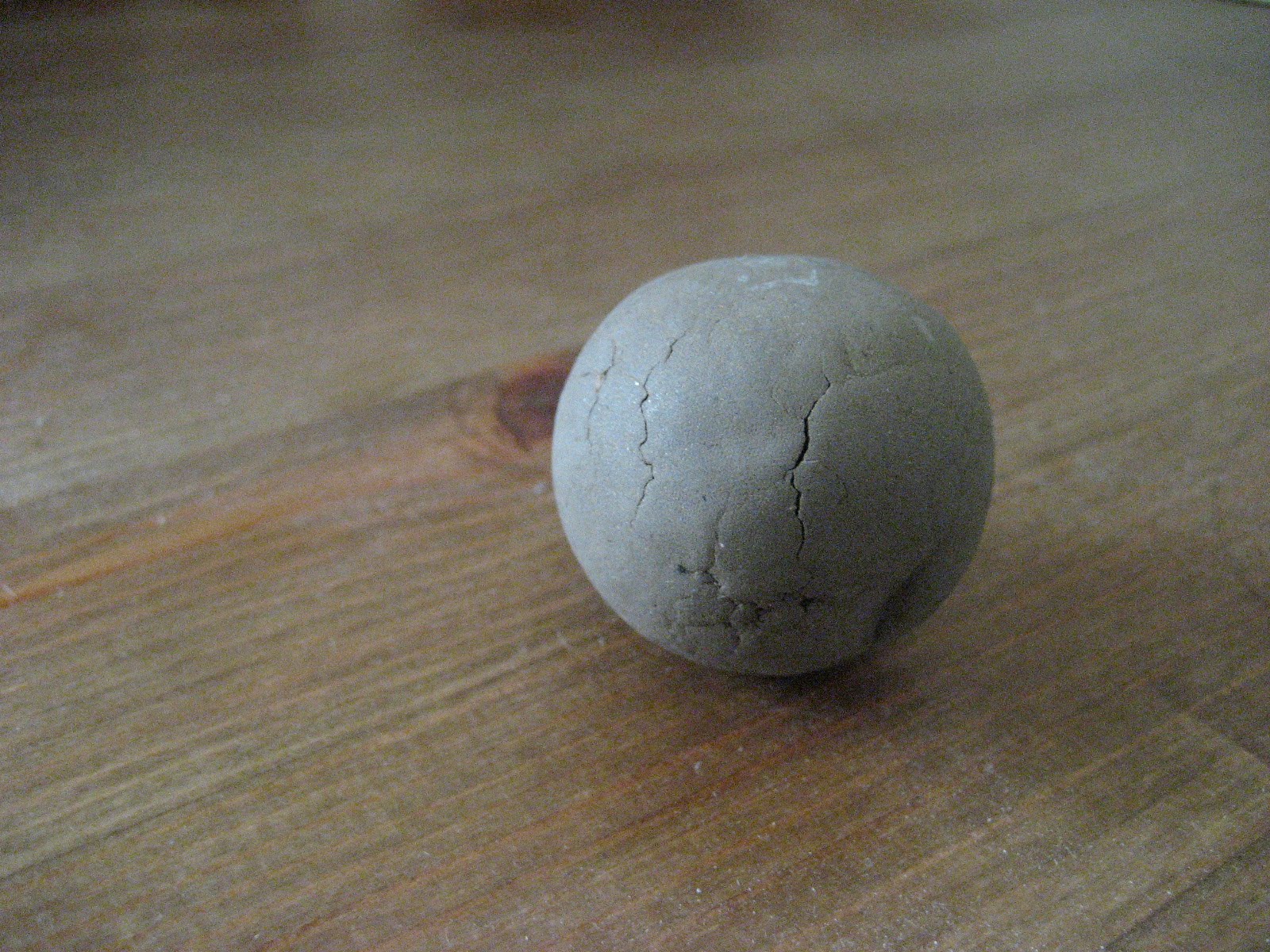
  2. It will hold its shape, and, when poked, sits stubbornly in a ball shape in your hand. This means you have clay soil.
  3. It will fall apart as soon as you open your hand. This means you have sandy soil.
Look at my impressive souvenir from the squeeze test. This is a ball of petrified clay - so I know I've got even more work ahead of me. If you can learn about your soil’s texture, composition, drainage, pH level and mineral density, you will avoid disappointing results that can occur when your soil is unsuitable to produce even the hardiest of weeds.

I also did a home soil test on 9 separate areas of the garden in order to map the nitrogen, potassium, phosphorus and pH levels of the garden. Overall, there were little to no nutrients in the soil - probably because of the poor drainage of clay. Amazingly, the soil was slightly acidic - which many plants like.

Which is why I'm now at Starbucks picking up large soil particles (spent coffee) to introduce into this soil which has the finest clay particles this side of the Mississippi. Coffee grounds are also supposed to be great for growing roses - take note rosarians. So if you've got fine textured soil and would like to fix it for free, go to your local Starbucks and let them know when you'd like to pick up coffee grounds. One caveat: some Starbucks are better than others about follow through and not putting old filters into the mix... but hey, it's a free service.

My next adventure will involve increasing the nutrient levels of the garden. Get ready to enter the odiferous world of composting!